Corrosion is one of the major threads endangering the fuel cell. Unlike, for example, a car—where the danger is a hole slowly corroded into a metal component—the real risk in a fuel cell is the release of metal ions during corrosion. These ions can poison both the catalyst layer and the membrane. If metallic corrosion occurs inside a fuel cell, you can observe the cell’s decline in real time.
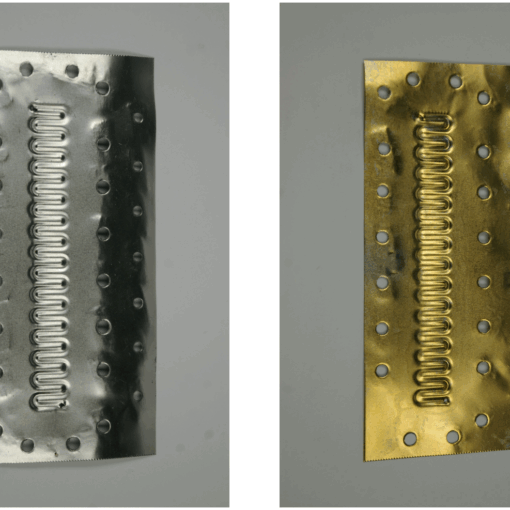
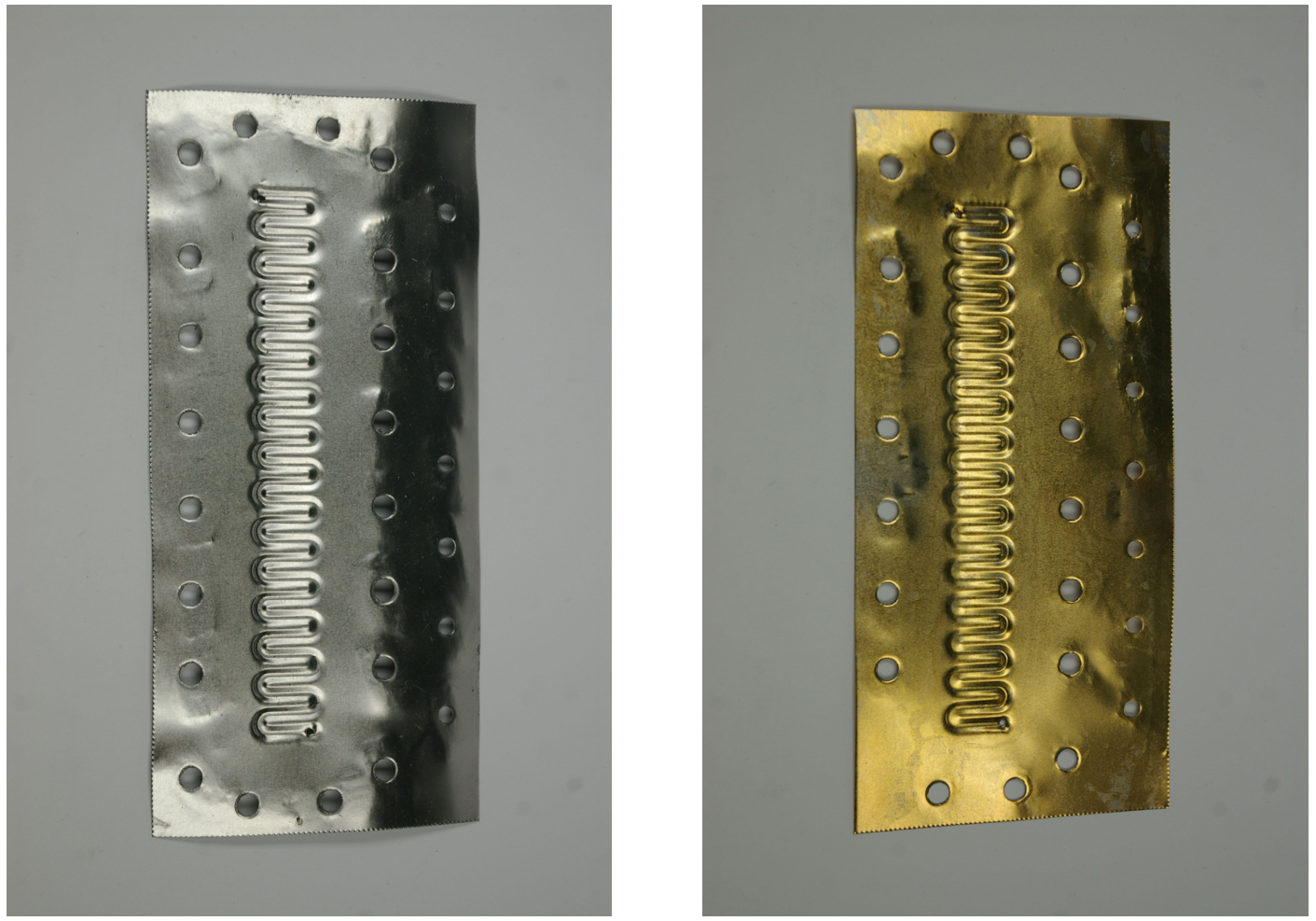
In our case, a fault during the gold plating of the flow fields caused parts of the copper cladding to become exposed to the environment inside the OFC. Have you ever seen copper exposed to the elements? It changes from that familiar copper finish to a dark green—verdigris. Something similar happened in one of our OFC models. Just look at the flow field: the gold layer has peeled off and the copper is exposed. The copper layer itself still looks quite reasonable—but the effect on the cell was not.
How did we become aware that copper ions were poisoning the MEA? We disassembled the dead OFC and examined the individual components using X-ray fluorescence analysis (XRF). We observed high copper contamination of the MEA at both ends of the active area, while a higher concentration of nickel ions appeared more towards the middle. When we compared this with a photographic image of the gold-plated flow field, it became apparent that the gold plating had severe defects precisely in the area corresponding to the copper contamination observed in the MEA.
And the nickel—where did it come from? The assembly instructions provide the clue: in gold plating on copper, a nickel blocking layer is applied to prevent the gold from diffusing into the copper base material, which would render the gold layer ineffective.
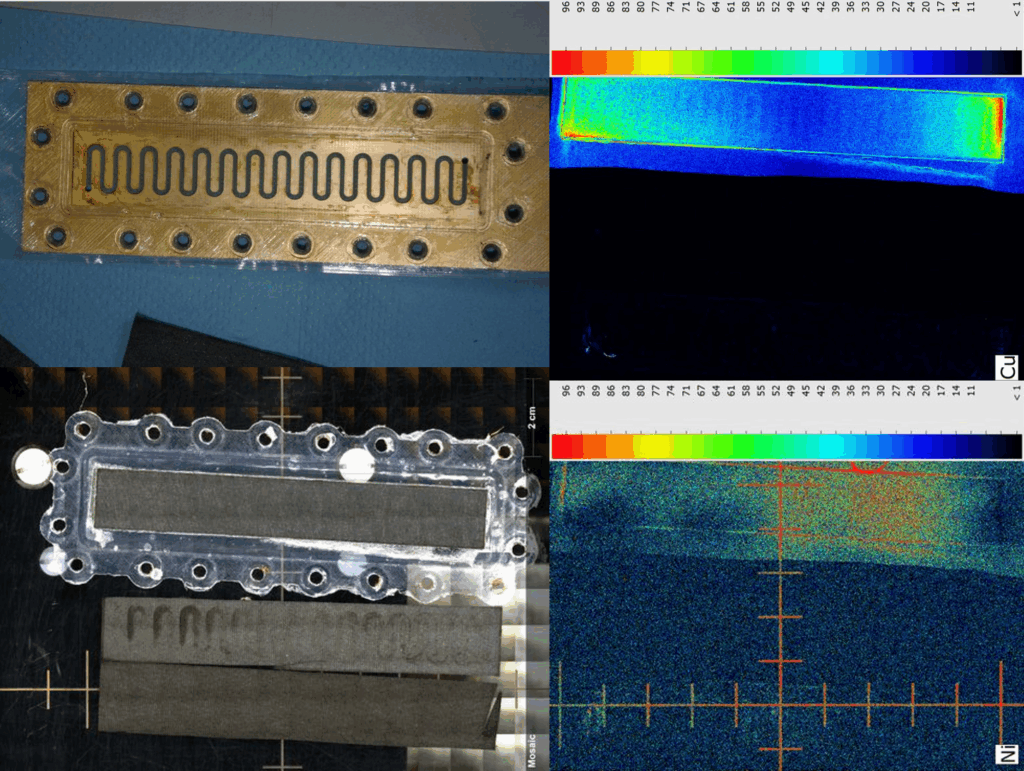
What conclusions can we draw from this experience? Metal ions definitely poison the fuel cell—and they have the potential to ruin your day if you are a fuel cell enthusiast. Therefore, always pay close attention to surface finishing quality and to the plating processes used. And if you experiment with other types of metal flow fields, such as stainless steel, metal ions released through slow corrosion can be one of the reasons behind the gradual decay of the fuel cell.